We Are Children of War, Becoming Teachers of War
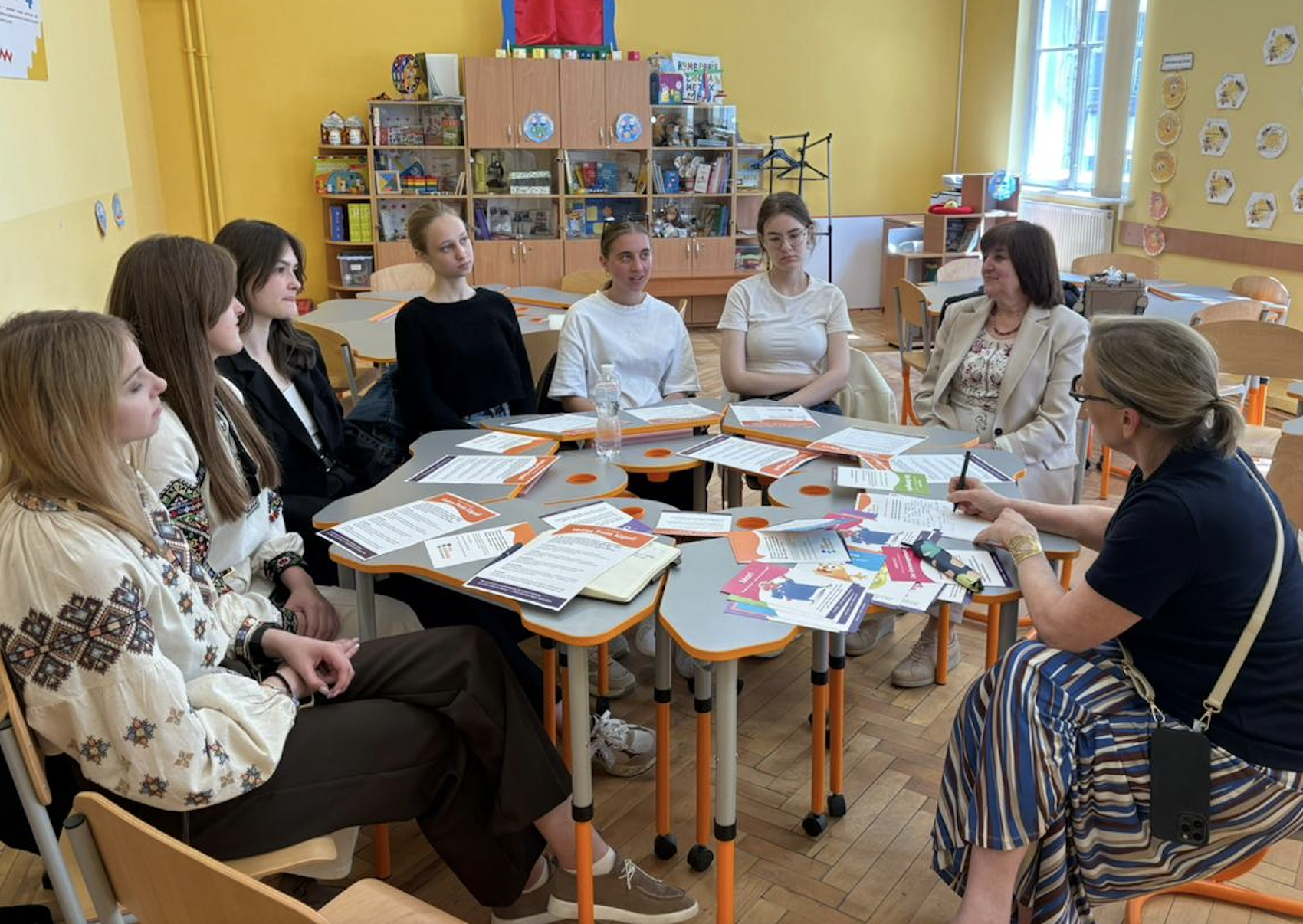
A reflection from the Fun Learning Conference Youth Track, Lviv
Sanna Lukander
I’ve facilitated a lot of discussions about education during my decades in the field. I started in textbook publishing in the 80s — boy, how time flies. Now, only within this last year, I have sat with policymakers in Kigali, with researchers at universities, with teachers who are exhausted and still showing up. But I haven’t often been in a discussion where the stakes of a conversation were simultaneously so universal and so personal as they were last week in Lviv, when a group of student teachers from Ivan Franko National University said, almost in passing, something important.
We are children of war, now becoming teachers of war.
They weren’t performing, nor had they been prepared with a statement. They weren’t making a political point. They were just talking about their own lives — and in doing so, they reframed every single question we were looking to answer about education in conflict settings. They are, in the clearest possible sense, what the global Youth, Peace and Security agenda describes when it calls for young people to be recognized not as victims or threats, but as essential partners in building what comes next.
What the Kigali students started
The Fun Learning Conference Youth Track didn’t begin in Lviv. It began in Kigali, in March, with Teacher Training College students and young leaders from the African Leadership University who gathered to talk about what education should look like, especially in communities touched by conflict, displacement, or limited resources.
Their message was visionary and hopeful, with a positive and ambitious outlook into the future. Learning should reach every child, wherever they are. Young people are not passive recipients of education; they’re co-creators of it. Playful, inquiry-driven approaches build the curiosity, creativity, resilience, and hope that children need to shape their futures.
They also said something essential, a call-to-action for us all: work with youth, not only for youth. That principle is now embedded in the formal Youth, Peace and Security framework — anchored in UN Security Council Resolution 2250 — which recognizes that sustainable peace cannot be built around young people without being built with them. This discussion with the young future teachers and leaders was thus a powerful opening to a chain of conversations that will continue through Laredo, Silicon Valley, Helsinki, and then back to Kigali.
Then the message arrived in Lviv. And it got very specific.
What the Lviv students added
When I asked the group in Lviv what they wanted decision-makers to know, what emerged wasn’t any form of abstract policy language. It was a list of things they had lived; conflict-affected knowledge that no training manual replaces.
They talked about children watching their parents during siren alerts, not for safety instructions, but for emotional cues. Is my parent or teacher panicking? Then I should panic too. Managing your own fear in front of a child, they said, is a skill. It needs to be taught; it shouldn't just be assumed.
They talked about how children who have grown up inside conflict often become highly organized, structured, and self-contained, and how adults sometimes misread that as a discipline issue rather than an adaptive response. Trauma-informed approaches aren’t a luxury add-on, they are the baseline. And they are not just a classroom practice: they are a foundation for the social cohesion and post-conflict recovery that communities will need when the emergency finally ends.
They are already thinking about that moment. Not just survival during the war, but after. About the emotional emptiness that might come when there is nothing left to be so urgent about. About how schools need to be preparing for that now, not waiting until it arrives.
And they talked about teachers. About the unsustainable weight of administrative tasks, the mandatory professional development that offers no real choice, the sense that the system takes from teachers without giving much back. Money follows the teacher is now in place in Ukraine to support more autonomy, and it is very welcomed. This is a challenge to every funder who sees what is truly important and impactful.
Why this matters for the Fun Learning Conference
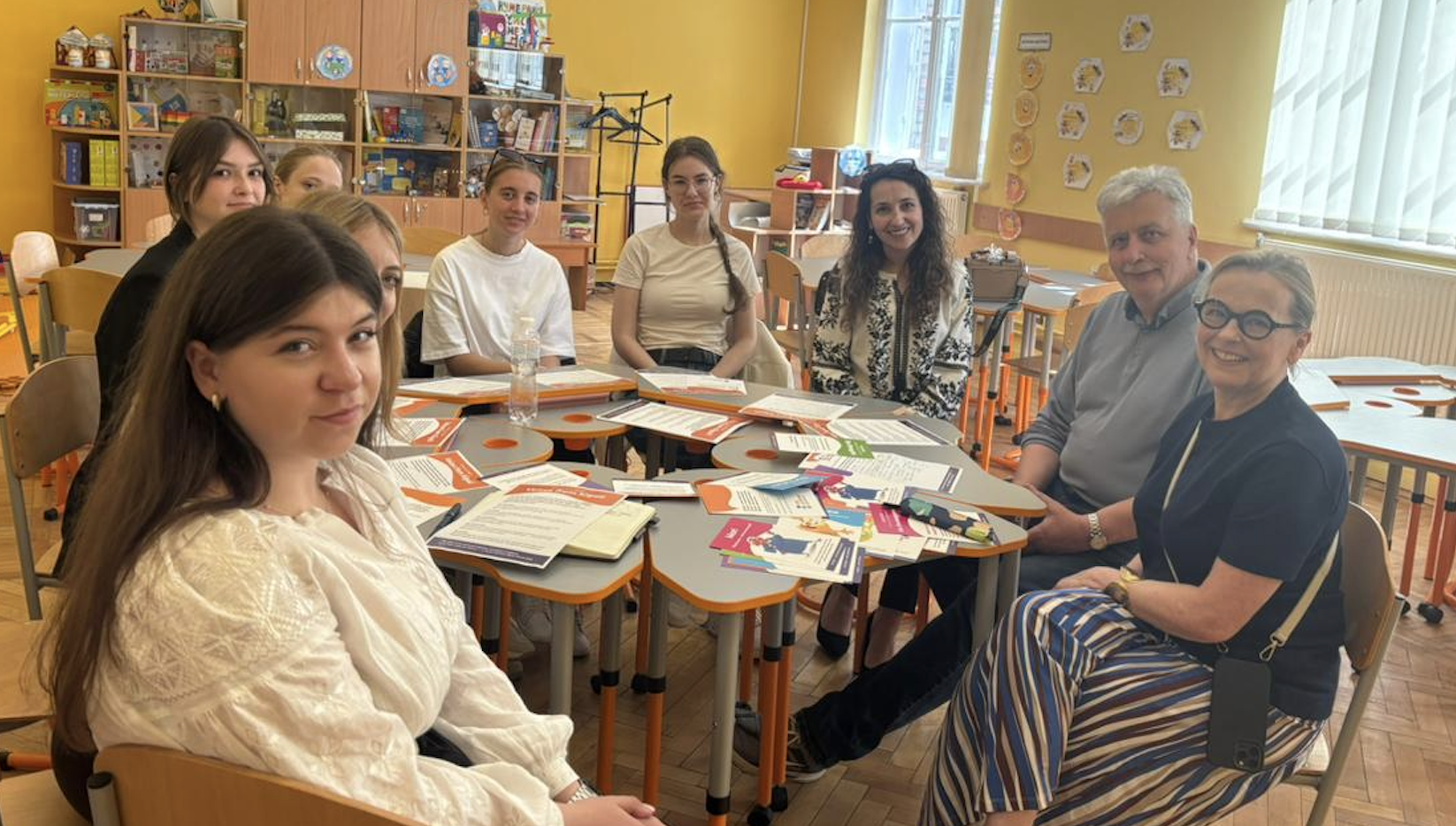
The Youth Track exists because we believe that sustainable education reform must include the people who will live inside the reforming systems, now and in the future, not just the people who design it from the outside. In Kigali, that meant creating space for young Rwandans to co-author a declaration about the future of learning. In Lviv, it meant sitting with Ukrainian teacher students and letting their experience shape what we recorded.
What connects these two conversations, and what I hope will continue to build as we move toward Laredo, Silicon Valley, and Helsinki is this: resilience in education is not a single thing. It’s not just keeping schools open during a crisis, it’s building systems that can hold children’s fear, support teachers’ humanity, help parents with psycho-social interventions, and prepare everyone for what comes after an emergency ends. That is peacebuilding. It just happens to look like a classroom.
The students in Kigali said: work with youth, not only for youth.
The students in Lviv added: and understand that some of those youth are already carrying more than most adults ever will.
A thing I keep circling back to
You don’t have trauma-informed schools without trauma-supported teachers. Resilient teachers build resilient children. This chain of youth-led peacebuilding knowledge from Kigali to Lviv, and now traveling to Laredo, Silicon Valley, and Helsinki, only holds if we take it seriously at every stop.
This is not a complicated idea, but it’s one that education systems around the world — not just those in conflict zones — consistently fail to act on. We ask teachers to hold the emotional weight of their students’ lives while simultaneously burying them in paperwork, mandating their professional development, and often underpaying them for the privilege.
The students in Lviv are about to become those teachers. They are conflict-informed, forward-looking, and asking us — clearly and without drama — to do better. Their words are traveling now to the next group in the chain. I’m sure Laredo is listening.
The Fun Learning Conference Youth Track runs across all FLC editions — Kigali, Lviv, Laredo, Silicon Valley, Helsinki — as a continuous, cumulative dialogue. Each group’s message builds on the last and travels forward.
Learn more here.