Building Rwanda’s Education Future on a Child’s Right to a Balanced Childhood
Every education reform conversation eventually arrives at the same question: what actually gives a child the best chance at a strong future? In Rwanda, a leading institution has been looking at that question with seriousness. Well before the first Fun Learning Conference took place, the Rwanda Basic Education Board convened a VIP Roundtable that shaped the direction of the work from its earliest planning conversations, and went on to co-host the conference itself, and to initiate and organise the involvement of Teacher Training College students as active participants, not observers. What follows is, in large part, the answer that partnership has been building toward.
In Rwanda, and increasingly across Africa, the answer we’ve been building toward since early 2025 starts somewhere specific, not with a test score, but with a child’s fundamental need for a childhood that supports their whole development.
Education is not only about what a child knows. It is also about whether they develop the confidence, curiosity, relationships, self-regulation and resilience to keep learning as the world around them changes.
That is the starting point for the Fun Learning approach: not simply, “How do we raise standards?” but a prior question: “How do we create the conditions in which every child can be genuinely secure, engaged and ready to learn?”
Starting From the Child, Not the Curriculum
Child development research and decades of educational practice point toward the importance of developing the whole child: their intellectual, social-emotional, physical and creative capacities, not simply their performance on a test.
A childhood that includes play, rest, connection, curiosity and joy should not be treated as separate from serious education. These are part of the environment in which children develop.
This isn't a fluffy add-on to serious education policy. Research on positive emotions suggests that positive emotional states can broaden attention and thought-action repertoires and help build enduring psychological and social resources (Fredrickson, 2001). These mechanisms are relevant to the conditions in which sustained learning can take place.
The implication is important: wellbeing is not what comes after learning, it is part of the environment in which learning happens.
A child's cognitive, social-emotional and physical development are deeply interconnected. Education that treats them as separate risks missing how each supports the others.
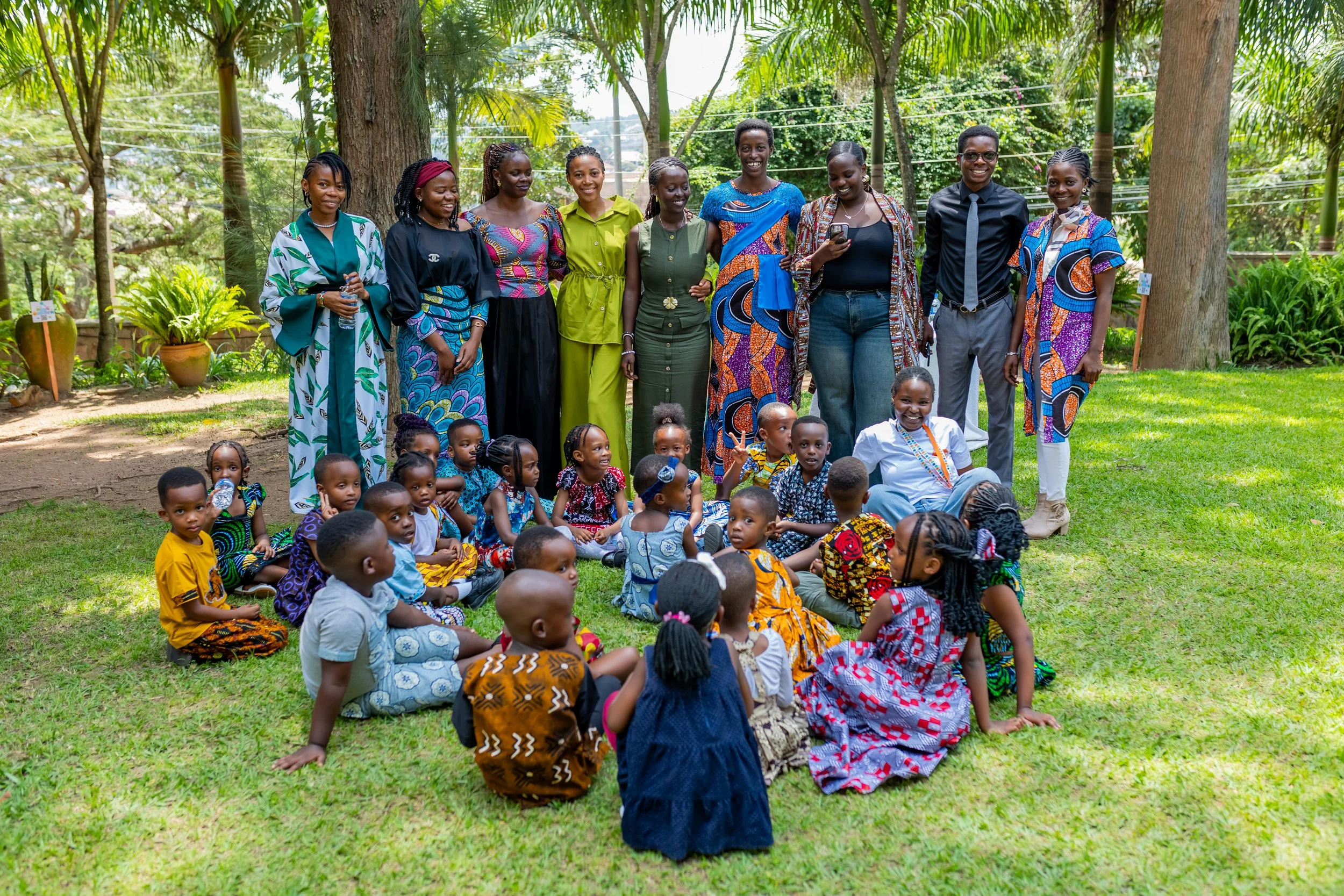
Children and Educators from the Imanzi School in Kigali enjoying the Fun Learning Conference 2026.
Resilience Is the Competence That Makes Every Other Competence Possible
There’s a capacity that belongs at the centre of this conversation, and it deserves to be understood precisely: resilience.
Resilience is increasingly understood not as a fixed personality trait, but as a developmental process involving capacities and behaviors that can be strengthened through experience, relationships and supportive environments (Masten, 2014; Juntunen, 2026).
And like any developing competence, resilience is shaped by the conditions of a child's world: whether they feel safe, supported and valued; whether they have meaningful agency; whether trusted adults are present; and whether their environment gives them room to act, learn and recover from setbacks.
This becomes especially clear in research involving children living through conflict and other highly stressful circumstances. Juntunen's 2026 review identifies physical safety, social support, children's own agency, trusted adults including teachers, school, play and meaningful activities as important factors supporting children's resilience.
The finding matters far beyond conflict settings. It reminds us that resilience is not something that can simply be switched on when a child encounters a crisis. It is developed through everyday experience.
Taken together, this suggests that resilience-building should not be treated as a unit added in the upper grades, or as a response deployed only after something has gone wrong. It needs to be present from the earliest years of development and education, and it needs to be developed deliberately across the educational journey.
A five-year-old who feels safe, capable and genuinely interested in what they are doing is already practising capacities such as agency, self-efficacy, optimism and engagement with learning, that can become important resources as challenges become more complex.
That work doesn't start in secondary school. It starts much earlier.
High Aims, Not a Lower Bar
None of this is an argument for lower expectations.
It's the opposite.
The competences increasingly emphasized in accounts of future learning and work — including self-regulation, adaptability, collaboration and creative problem-solving — are difficult to cultivate in classrooms where children are persistently anxious, disengaged or unsafe.
They are more likely to develop in environments where children feel secure enough to participate, take appropriate risks, make mistakes and keep going.
This is where the distinction between wellbeing and standards becomes important.
A child's wellbeing is not the alternative to high standards. Properly understood, it is part of the infrastructure that allows high standards to become achievable and durable rather than dependent on short-term pressure.
And resilience sits at the centre of that infrastructure.
Already Built in Rwanda
This is no longer simply a theoretical proposal. It is already being put into practice.
The Fun Learning model has developed teacher-training activity in Rwanda through a combination of physical campus-based learning, hybrid professional development and practical classroom approaches. The 2026 Fun Learning Conference described the Kigali campus as an anchor for a wider teacher-learning network, with the emphasis on translating professional learning directly into classroom practice.
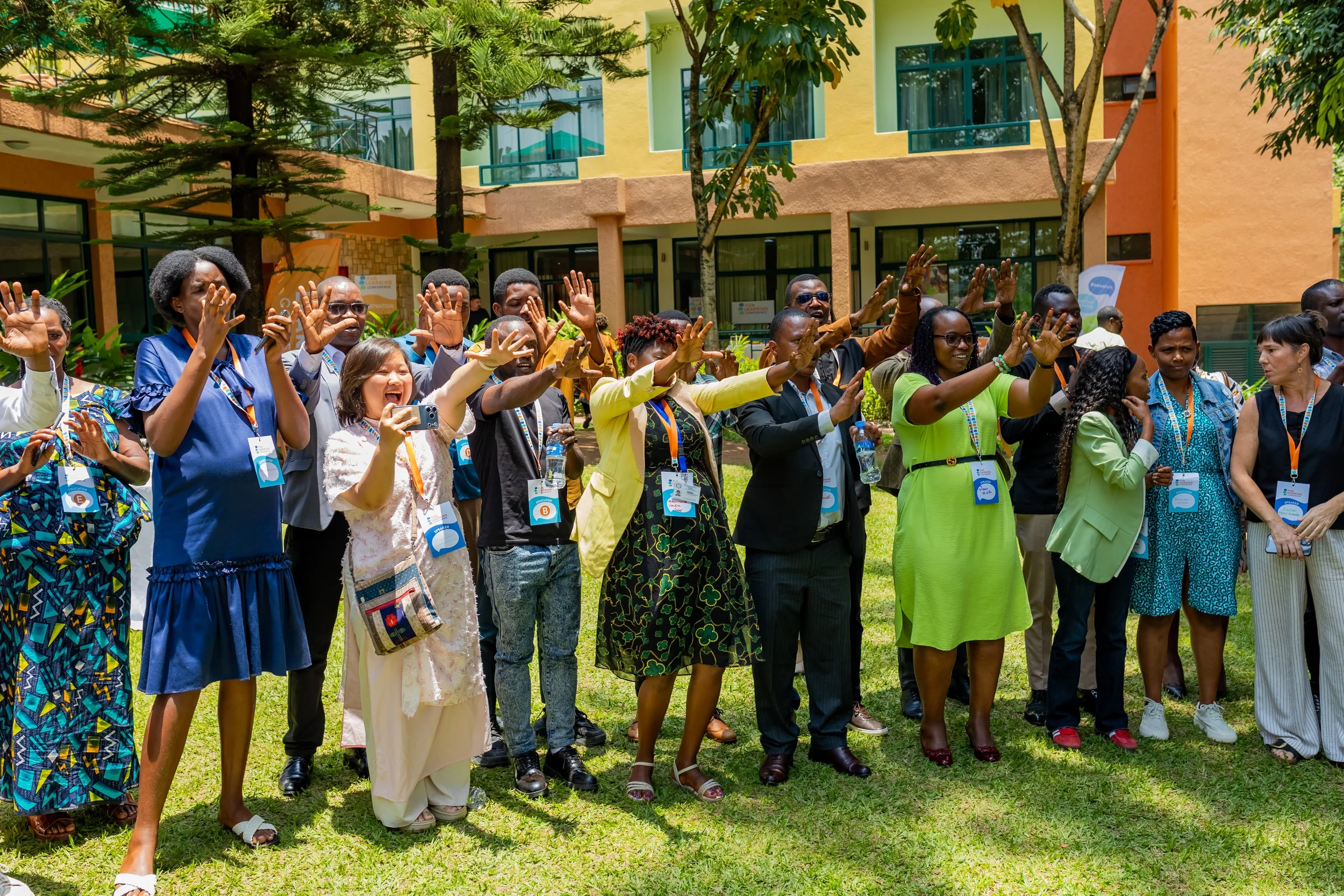
Speakers and Participants of the 2026 Fun Learning Conference joining kids in dance and joy.
The inaugural Fun Learning Conference, held in Kigali on 13–14 March 2026, brought together more than 200 policymakers, researchers, educators and future education leaders. The programme included representatives from the Rwanda Basic Education Board, National Child Development Agency, University of Rwanda Teacher Training College, Catholic University of Rwanda, Texas A&M International University, University of Helsinki and other partners.
The conference was deliberately designed to connect knowledge production, educator capacity and policy reform, moving research into practice and creating a feedback loop between classrooms, evidence and policy.
The work is grounded in practical principles: creating joyful, engaging and purposeful learning environments, strengthening teacher capacity, supporting inclusion and bringing children and learners more actively into the experience of learning. And importantly, the conference did not treat young people simply as recipients of reform.
The Youth Track was co-developed with students from the Teacher Training College and African Leadership University. Students participated in workshops, demonstrations and system-level discussions and co-authored the Kigali Youth Declaration.
That matters because an education system intended to last needs the people who will eventually teach and lead it to have a meaningful role in shaping it.
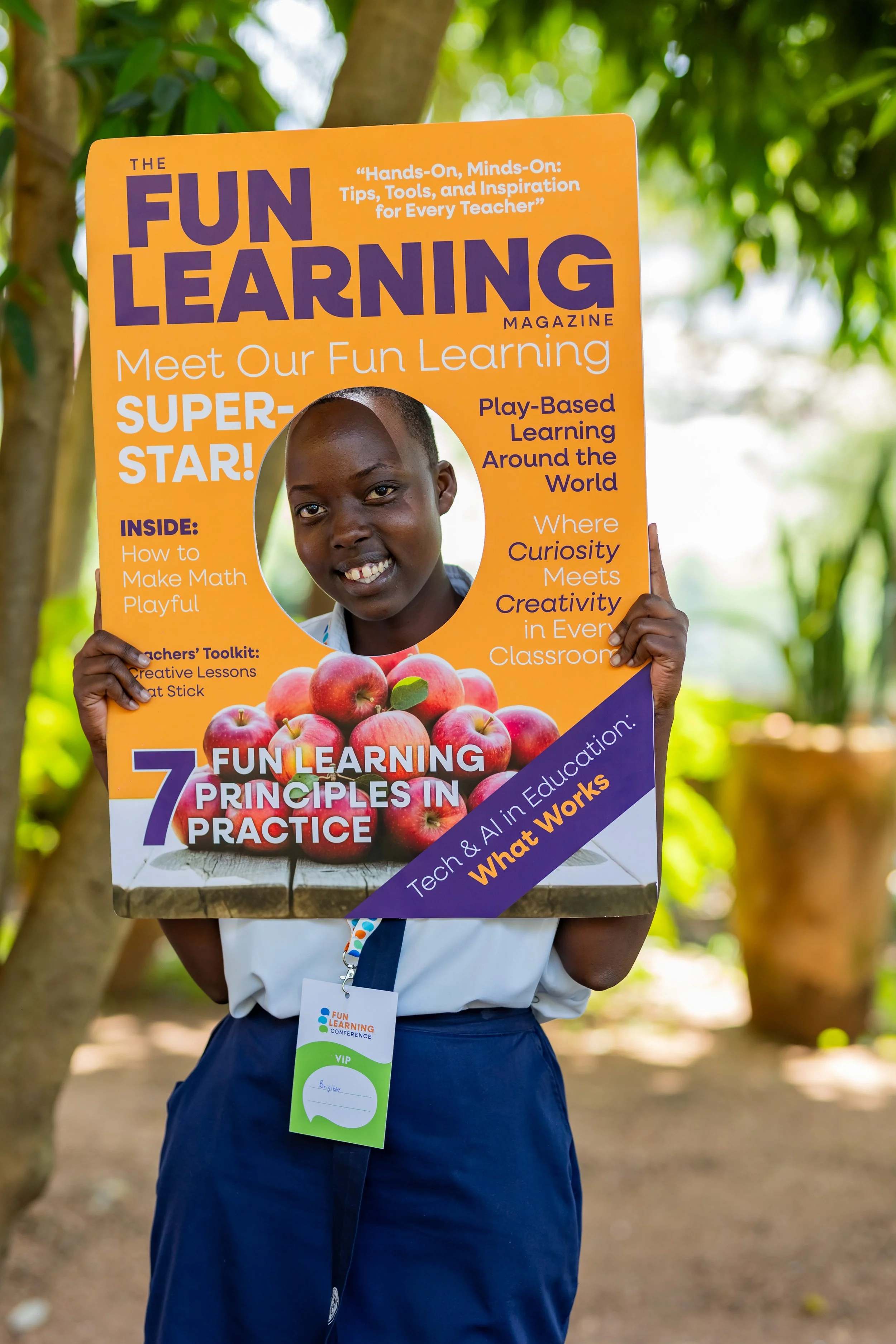
Future Teachers join the work for a brighter more resilient future for Rwanda’s children.
One Distinct Voice Among Several
Rwanda is increasingly becoming a place where different global education traditions can meet and learn from one another.
There is genuine value in approaches that emphasize high expectations, system-building, teacher quality and institutional capacity. Singapore's experience, for example, offers important lessons about what sustained investment in educational standards and system coherence can achieve.
The Fun Learning approach isn't in competition with that.
It begins somewhere different: with the child, with the conditions that support healthy development, and with the proposition that wellbeing and high expectations can reinforce rather than undermine one another.
The question is not whether Rwanda should choose between rigorous education and happy childhoods. The more interesting question is whether we can design education systems that deliver both.
And whether the conditions that make children feel secure, engaged and valued can also be the conditions that develop the resilience, adaptability and learning capacity that a rapidly changing future will demand.
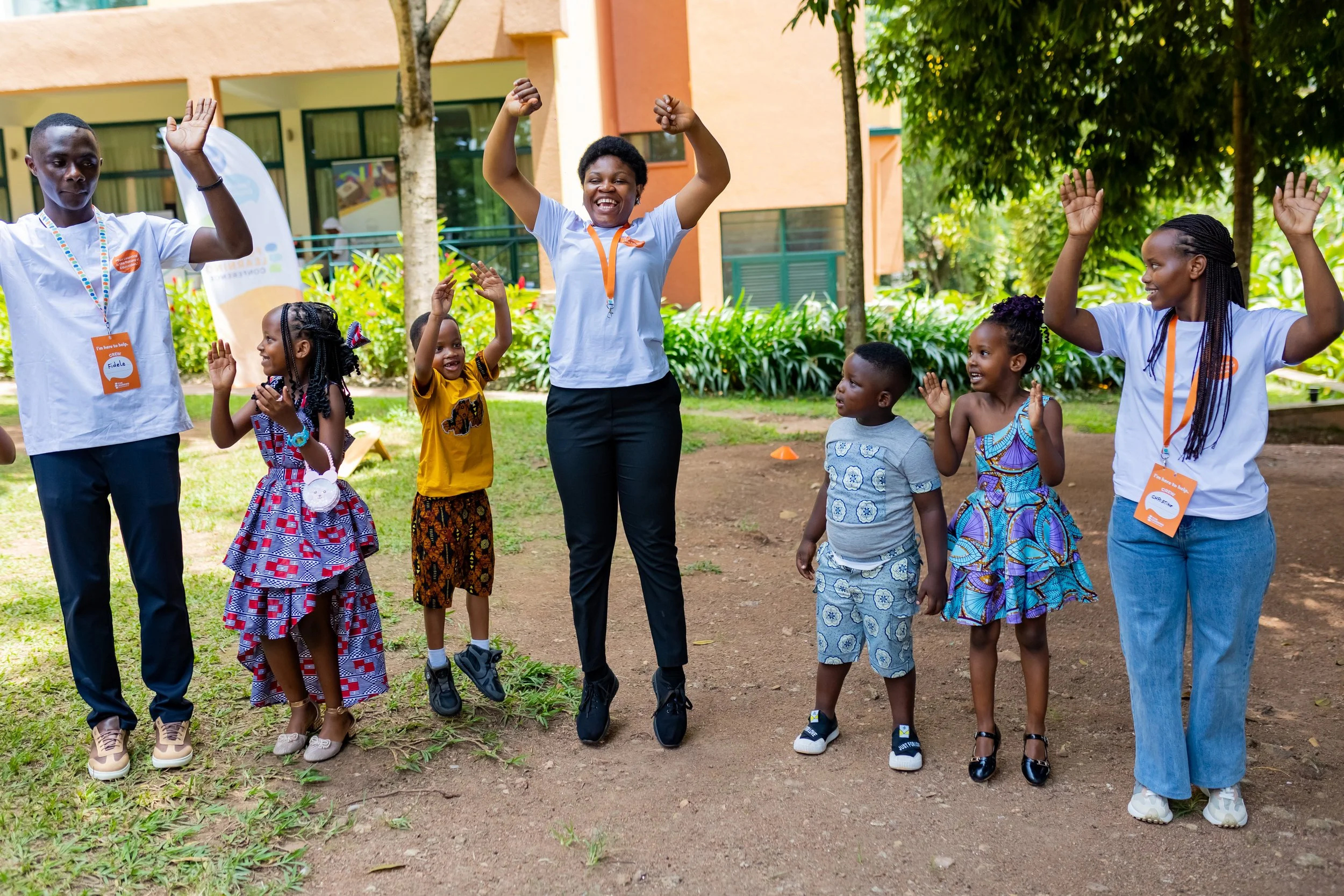
Together we win, everyone’s in!
The Road to Kigali 2027
In February 2027, Kigali will host the second Fun Learning Conference under the theme Wellbeing & Education.
The first conference established a platform connecting research, policy and practice. The next step is to ask a harder question:
What happens when these ideas are put into practice, and what does the evidence tell us?
The direction for Kigali 2027 is already clear. The 2026 conference report identifies the next phase as one of strengthening Africa-led research, improving data systems, expanding teacher development, monitoring implementation, sharing innovations and building the partnerships needed to turn knowledge into sustained practice.
That means moving from foundation-building toward implementation evidence: practitioners putting the approach into practice, emerging evidence from Fun Learning pilots, and a growing African research capacity able to examine what works, where it works and why.
The goal is not to arrive in Kigali with all the answers, It is to arrive with better questions, better data and a growing body of evidence generated by the people and communities closest to the work. Because the next stage of the conversation about wellbeing-first education cannot be built on conviction alone.
It has to be built on evidence.
And that may be the most important step of all: moving from saying that children deserve education that supports their whole development, to demonstrating in classrooms, communities and data what happens when we build education systems that actually do it.
Sanna Lukander, August 2026